Monday, September 7, 2026

James and Susan Grant

James and Susan Grant with two of their ten children
at their home in Indian Canyon

Hotel Grant Duchesne, Utah

 My great grandparents James and Susan Grant. They began their life together living in a home in American Fork, Utah. They later moved the family to Thurber, Utah (now Bicknell). James served as an early bishop of the Thurber ward and later left his young family to serve a mission for the church. Years later they moved the family again to the edge of the reservation in Duchesne County. For a while they lived at the stage coach stop in Indian canyon, between  Castle Gate and Duchesne. Later again they moved into Duchesne where they built a hotel. The Hotel Grant is where they spent the rest of their lives. The Grants second child, Pearl married David Monroe Lee. My father Courtney Monroe Lee was born in the hotel in Duchesne.

The Grants had ten children, five of whom died soon after birth and one son was drowned during a flash flood. Three daughters and one son grew to adulthood.

Sunday, January 25, 2026

Running Deer


Imagine my surprise when I discovered that I actually had native american ancestry. My 7th great grandmother was Running Deer. Running Deer was a lovely native american woman born in the Hudson River valley, about 1715. Based on research she was probably a Mohican, the Mohican tribal area was along the Hudson River. Current research based on where Running Deers daughter lived. At some point she married a white man and the moved into a cabin he had built. Not very accepted by locals there is very little actual records except what came from her daughter and the stories she told her children. As much as can be found they think her husbands name was Charles Crosby but the local white population just knew him as "Squawman".

Wednesday, August 21, 2024

Huntly Castle ghost story? and Clan Grant

There is no shortage of ghost stories related to the old castles scattered about the world. This is one you may never have heard.  While my wife and I were visiting Great Britain in 2021 we were having lunch one day at our hotel in Aberdeen Scotland.  Our server started a conversation about our trip.  We told him we were exploring places connected to my ancestors from Scotland and exploring old castles. He told us of a few castles that we should visit in the north of Scotland, one of those was the Huntly castle.

Huntly Castle

As we visited this wonderful old ruin and marveled at the architecture, we explored the grounds and the various levels of the castle. When we were on the third floor of the castle we could hear children playing outside, the usual sounds of laughing and screaming as children do. We thought nothing of it until we walked outside and it was suddenly deathly quiet. We looked at each other and commented that we had definitely heard children playing in the yard. Although it was a beautiful day it gave us a very eerie feeling.  A few days later when visiting the Urchart castle, on the shore of Loch Ness, which had belonged to my Clan Grant, I read this story in a booklet I picked up at the gift shop. 

The third Laird of Freuchie, James of Forres, was a great man of arms and was infamous for raiding and plundering. One of the chief figures in a story of orphans eating at a trough. These were the children of a Deeside clan wiped out by the Grants and their allies, the Gordons. James refused to have anything to do with them so the Gordon chief, the Earl of Huntly, took them all under his care and fed them each day from a trough outside his castle. But when James, on a visit to Huntly's Castle, saw the children huddled and kneeling at the trough, he was conscience stricken and took them home with him to be raised as Grant descendants and they consequently became known as 'the race of the trough'.

Were the children we heard the ghosts of trough children?  Since I am a descendant of this James I have to wonder if I am of the ‘race of the trough’.  Perhaps these children we heard that day are my real ancestors. But whether or not I am blood or adopted.  I'll take it.     I love reading and learning about the noble people north of the wall.


Sunday, January 23, 2022

John Christian Baum

 Reading through some family histories I discovered that my third great grandfather was once a slave. John Christian Baum.

His father was so poor after the Revolutionary War that he “bound out” John to a rich man to help support the family. He worked for this man until he was twenty one years old. At that time his brother, Jacob bought him back. John and Jacob were very close and loved each other very much.


I find the term “bound” interesting. A very politically correct term for “SLAVE”

John later joined the church, was married and had nine children. He died in Heber, Utah.

Friday, January 7, 2022

Robert The Bruce


My 17th great grandfather: ROBERT I Popularly known as Robert the Bruce, was King of the Scots from 1306 to his death in 1329. Robert was one of the most famous warriors of his generation and eventually led the Kingdom of Scotland during the first war of Scottish Independence against England. He fought successfully during his reign to regain Scotland’s place as an independent country and is now revered in Scotland as a national hero


Wednesday, December 29, 2021

SIR JOHN GRANT OF FREUCHIE1

While visiting Scotland we descoverd that one of my ancesters was not only a member of the Grant Clan but he was also the Lord of a castle.
The beautiful Urquhrt castle, siting on the banks of Lock Ness.  In 1509 SIR JOHN GRANT OF FREUCHIE the first chief of Clan Grant takes formal possession of the castle and lordship of Urquhart from King James IV.'to construct within the castle a tower, hall, chamber and kitchen, with all the requisite offices, such as a pantry, bakehouse, brewhouse, oxhouse, kiln, cot, dovegrove and orchard? from the royal charter granted to Sir John and sealed at Stirling Castle, December 1509

Saturday, August 29, 2020

A Post Card Home

Years ago I was the recipient of my grandma Lee’s personal records. It consisted of her genealogy papers and a box of papers that she’d written bits and pieces of her personal history. I tried to put them in a chronological order and I compiled her history in a readable fashion.

Among her belongings was this leather post card that she had sent to her mother while she was away at school.

It reads around the edges “322 University Street SLC, It is time I was going to school, Your loving Pearl”

On the back it’s addressed to.

Mrs. S S Grant 

Theodore Utah

(Theodore was the original name of Duchesne)

I’m a little confused about the address in SL, I was told she attended school at the BY Academy in Provo. 


Thursday, January 25, 2018

Issac Baum


Issac Baum was born on April 7, 1832 in Chester, Pennsylvania. His family lived for short time in Carthage, Illinois and later moved to Nauvoo. At the age of twelve he was one of the witnesses of the Martyrdom of Joseph Smith. he wrote of his experience.
On June 26, 1844, I was helping my father cultivate the corn when shots were heard. I called to Father, saying, “They have killed the prophet,” and Father asked, “How do you know they have killed the prophet?” I said, “I heard the shooting.” Father told me to go to the house and tell Mother to have his clothes laid out, for he was going to town. When I got home, Mother was starting for a bucket of water to start the noon meal, and when I met her I said, “Oh, Mother, they have killed the prophet,” and she said, “My son, I fear they have,” I took the brass bucket and got the water from the well, and as I came back and gave it to her, as she looked in the bucket she said, “Son, there is blood in this water. Throw it out and get some more.” The water was much better this time. A boy like me was too excited to wait for father, and as I put the bucket down, I started away, calling back to Mother, “Tell Father I have gone ahead.” Not taking time to go around by the road, I crawled through the fences, back yards, and arrived at Carthage Jail, where a large crowd had gathered. I heard the militia shouting, profaning and boasting what they were going to do. The body of Joseph was sitting propped up by the old curb. One of the militia took hold of his hair and jerked his head up, and raised his sword which was sharp on both edges. But just then lightning came out of a clear sky and he dropped to the ground. The mob thought he was dead, so they galloped away on their horses, any way to get away quickly.
Issac was also one of the men that volunteered to go to the rescue of the ill fated Willie and Martin handcart companies that were stranded by an early winter storm in October of 1856.
Issac married Mellissa Sessions on 6 May 1856 in Provo, Utah and they became one of the earliest families to settle in what would become Heber, Utah. Together they were the parents of eleven children, the oldest, Louisa Maria is my great grandmother.
Issac was said to always be a man of service to others willing to always lend a hand.
Issac died in Heber 18 November 1920. He is buried in the Heber City cemetery.


Sunday, January 21, 2018

John Lee

Home of John and Sarah Lee as it now looks on Main Street in Heber City
John Lee was born January 18, 1822 at Mission, Nottinghamshire, England.
John was left fatherless at age two, at ten years old he went to work, first as a farm hand and then in a foundry for six years.
John Lee married Sarah Roebuck on November 15, 1841. John joined the Church of Jesus Christ of Latter-day Saints 1846 and Sarah was baptized in 1849. After being baptized John became a traveling elder and baptized some twenty persons.
John and Sarah left England in 1856 on the sailing ship Enoch Train. They arrived in America at Boston, and then went West by handcart. "Travel was slow and dusty, everyone got very tired, many died. June 15 our son William age twelve died and was buried by moonlight somewhere on Moon creek. Three of our children had to ride the whole way (one 6 months, one two years, and one four years old)."
The Lee family, after arriving in Salt Lake went South and spent three years in Spanish Fork before moving the family to what is now Heber City. "There were twenty-eight families here then."
Their home was the first with a fireplace in it when finished. At Christmas they had the first party in the valley.
John and Sarah had twelve children born to them. Sixty-four grandchildren and eighty-six great grandchildren.
John Lee died at home on September 14, 1909. John and Sarah are buried in the Heber City cemetery.


Sunday, July 23, 2017

Pioneer Day, July 24th

We have several of our ancestors who are remembered among the "pioneers" of Mormon history.
Among those great pioneers are: John and Sarah Lee and their children, George Sidwell and others.
I have chosen to highlight David Grant, my great great grandfather. David made the trek West not once but three times. David was born in Scotland and at the age of 22 made is way to America. In 1840 while in Payson, Illinois he was baptized a member of the Church of Jesus Christ of Latter-day Saints. David was a tailor by trade and had a successful business in Nauvoo.
David and his first wife Mary were among those that received their temple endowment in the Nauvoo temple.
After leaving Nauvoo they were among the saints that spent a time at Winter Quarters. In Winter Quarters Mary gave birth to their second child. Mary died shortly after giving birth.
The next year David was called to go with Brigham Young as he led the first company to begin the great exodus West. David was with the vanguard company that entered the Salt Lake Valley on July 24th 1847. The next spring David returned to bring his 2 young children to the valley. David married again and was then called to serve a mission the British Isles.
After serving a 4 year mission he returned again to Salt Lake for the third time with a handcart company. David introduced Elizabeth Williams, one of the girls he had met on the trip West to his son, hoping they would marry. She was not impressed with David's son and instead Married David on 21 December 1856 together they had 8 children.
David had 2 wives pass away during his life time was married 4 times and fathered a total of 19 children. He died at his home in Millcreek, Utah on 22 December 1856.

I am so thankful for all those that came before us. To blaze the trail with their testimonies and faith.

If you want to read the complete story of David there are several versions posted in FamilySearch

Wednesday, May 3, 2017

Berthe Maria Johnson Bulow

Berthe Maria Bulow, picture taken the summer before here death.
I believe the medal she is wearing was to honor her as one of the surviving Utah pioneers.
Grandma Bulow, was my Great great Grandmother. Berthe was born on February 10, 1843 in Denmark. The daughter of Kastina Peterson and Andrius Pole Poleson. She was born in the home of Rasmus Pederson, where she lived as their daughter. When Berthe was nine Rasmus died and his wife remarried making it impossible for her to live there any longer. She went to live with her mother's second cousin, Louise Grand.
Berthe was baptized a member of the Church of Jesus Christ of Latter-day Saints on January 1, 1866. Four months later at the age of twenty-three she left Denmark and set sail for America. She landed in New York on October 1,1866. She then went to Boston and from Boston to Florence, by train. She remained in Florence only three days before heading to Utah.
On March 14, 1868 she married Charles Henry Bulow, being his third wife. While in Salt Lake two children were born to the Bulow's. In 1872 the family moved to Richfield where they made their home. While in Richfield five more children were born. My great grandfather Samuel Ezra Bulow was their fourth child. Three of the Bulow children died in 1878 during a diphtheria epidemic.
In the early spring of 1891 Bertha's husband died.
In 1910 Bertha moved to Moroni where she lived with her son Samuel. She later went to live with her granddaughter Mary Lucille Bulow Clark in Provo. She lived with the Clarks until her death on November 21, 1937, at the age of ninety-three. My mother, Carol once told me she was passing by the bedroom that she shared with her Grandma and she heard her take a deep breath, she went in to check on her and found that she had died. She said "I know that I heard her take her last breath." Mom would have been eight years old at the time.
Berthe is buried beside her husband in the Moroni, Utah cemetery.

Sunday, April 23, 2017

Francis Cooke

Going back a bit for this one. My tenth great grandfather Sir Francis Cooke, left England for religious freedom. He was among those that arrived in the "New World" on the Mayflower.
Born in England in August 1582. He died sometime after he was eighty years old in Plymouth, Massachusetts on 7 April 1663. He learned his trade of wool comber before leaving England.
He was married to Hester Le Mahieu, they had at least one child, Jane Cooke.
Not much else is known about him.
Wool Comber: In the manufacture of woolen textiles the wool was carded to lay the fibers into roughly parallel strands so they could be more easily drawn out for spinning.

Saturday, April 15, 2017

DNA test, No Big Surprises

When we were serving as hosts at the RootsTech event they had a 50% off DNA deal with Ancestry.com. I could not resist the urge so I did it. Sent my test tube of spit off and awaited my personal DNA results. almost eight weeks later they finally arrived. Of course since my family has been very active in the family history world I pretty much knew what the outcome would be but still it is interesting to see the numbers.
I am officially
87% Great Britain (no surprise here)
4% Scandinavia
2% Ireland
2% Europe West
2% Iberian Peninsula (Spain and Portugal)
<1% Finland/Northwest Russian
<1% Europe East

Saturday, April 8, 2017

Chancey Charles Lee

My paternal great grandfather Chancey Charles Lee was born 10 October 1853 in Sheffield, England he was the seventh child of John and Sarah Lee. At the age of two he started the long journey, with his family to Utah first boarding the ship Enoch Train in Liverpool and then traveling with the first handcart company to make the long trek to Utah, at the age of three. Not long after arriving in the Salt Lake valley the family made another journey to settle in the Wasatch valley in what would become Heber.
Chancey married Louisa Marie Baum on 26 June 1876 in the Endowment House in Salt Lake City. At the time of their marriage Chancey was twenty-two years old and Louisa was Nineteen. Together they had Ten children. Shortly after giving birth to their youngest his wife became ill with pneumonia and died on 20 October 1896, leaving Chancey with nine children to raise on his own, ranging in age from four weeks to fourteen years old. Just a month later the baby also succumbed and died 19 November, (eight of his children lived to adulthood).
Chancey never remarried but managed to raise his children on his own. He spent most of his life farming on a small scale and labored diligently to provide for his family.
He lived as a widower for forty-five years. At the time of his death he was living in the home of a grandson in Tabiona, Utah. At the time of his death he had seventeen grandchildren and eighteen great-grandchildren
He was laid to rest along side his eternal companion in the Heber City cemetery.
Voyage of the Enoch Train
(a large model of this ship was in the church museum of history for many years)


Sunday, March 26, 2017

Charles Mickelson Clark

 My maternal grandfather Charles Clark, was born 26 October 1903 in the small town of Hilliard, Wyoming. Hilliard is just Southeast of Evanston, Wyoming (I don't think it is there any more). He was born the oldest child of Charles Mickelson and Mary Bate. His mother died shortly after giving birth to her third child. Charles father was a rodeo rider and left his three small children with family and went on the road. It was later learned that Charles Mickelson had died in Kansas. Charles and his younger brother were eventually adopted and sealed in the temple to the family that had taken them in, George and Mary Clark. As a young boy the family lived in Orem, Utah where they farmed for several years.
On August 1923 grandpa married Mary Lucille Bulow in Provo, Utah. They made their home in Provo, Utah living with his father in the family home. Charles and Lucille cared for his father until his death and then remained in the home all of their married life. The home was a simple square frame built home divided into four rooms of equal size. Charles made many improvements to the home over the years including an indoor bathroom and added a bedroom on the back of the home. my mother remembers sleeping in the back room with a plastic sheet over her because the roof had not yet been shingled.
Charles and Lucille were the parents of six children. Two of their children died as infants. Marie the day after she was born and Robert died of pneumonia at six months old. Four of their six children lived to adulthood, my mother Carol was their fourth child.
Charles worked most of life for US Steel, first working as a chemist in the Ironton plant in Provo and later and the Geneva works in Orem.
It was from my grandpa that I learned the value of work. As a boy I enjoyed visiting and helping him with various work projects. He never gave me job to do and then left me to work, we always worked side by side. From him I learned the joy of gardening and working in the yard. I once helped him remove all the old shingles off his very steep roof and then we laid tar paper and new wooden shingles. I was about sixteen at the time and I remember him teasing me when a group of girls walked passed the house and made cat calls at me.
Charles lived the last few years of his life with my parents in Spring City, Utah and then In a rest home in Heber, Utah where he died on 1 August 1991. Charles and Lucille are buried in the Provo city cemetery just a few blocks from where they lived their entire married lives.


Sunday, March 12, 2017

The Bag Lady and The Sheepherder

This handsome couple (who loved each other dearly) were my grandparents. Pearl Grant and David Lee.
Pearl was actually an educated lady, she went to the Brigham Young Academy and was an elementary school teacher, in Duchesne County until she got married and started a family. David and Pearl had seven children 4 boys and 3 girls.
David had a sixty acre homestead in the Rock Creek area of Duchesne and had a sizable herd of sheep. During the mid to late 1920's David sold his homestead so he could open an auto repair business in town, with his brother. Not long after getting the business up and going the country was hit with the "great depression" and the Lees lost everything they had. David and Pearl moved into a home in Charleston, Utah in an area that is now beneath Deer Creek Reservoir. After a house fire that destroyed their home David moved his family around several times but eventually went to work for US Steel in Orem, Utah, and built a home in the river bottoms area of Provo.
I was eight years old when Grandpa died so I don't remember much about him except that he had a mop of white hair that reminded me of Mark Twain, and it seemed that he smoked a lot.
I remember visiting Grandma in her home in Provo, where she had moved the bed into the living room next to the kitchen so she would not have to heat the whole house. She was always afraid that if the house was too warm it would start on fire (in addition to house fire in Charleston Pearl had been burned badly as a child, when her dress got too close to the stove). Grandma was a bit of an eccentric artistic type. She would walk the streets of Provo gathering "stuff" that she could make crafts with. I remember her making artificial flowers out of cellophane bread wrappers (her sons refused to let her leave them on any graves at the cemetery). She once gave us grand-kids small necklaces that she had made out of old tooth brushes by cutting the handles into small squares and stringing them together. She always had coffee cans full of buttons, broken ceramics or anything else that she found interesting. Just before Grandma died she was moved into a rest home, I remember that my Dad and his sister's husband took their trucks to her house and just loaded everything she had and took it to the dump. I don't think anybody even went through anything to see if there was something of value, either monetary or sentimental. In general I think most of Grandma's family (at least her children) saw her as a bit of a kook or nut case. But I always saw something more. I was captivated by her artistic talents and her ability to see beauty in what others saw as junk.
They are buried side by side in the American Fork cemetery.


Sunday, March 5, 2017

Courtney Monroe Lee

Happy birthday, Dad. Today March 5th is dad’s birthday he would be 99 years old. Born March 5th 1918 in Duchesne, Utah the third child of David and Pearl Lee. He once told us his name was chosen because he was born the day that the circuit court judge was in town, so it was court day. His childhood was spent in Duchesne as normal as expected for a child of the era. David Grant was homesteading land and keeping sheep. Dad attended school only to the eighth grade; he then went to work with his dad herding sheep on the family land.
When World War II broke Courtney joined the army and served for the duration of the war. His war service included being a driver in the Pacific Theatre, either driving officers back and forth or driving a large tank truck to provide water for other service men.
At the end of the war dad returned to civilian life. By this time his family had moved to Provo, Utah. It was in Provo that dad met Carol Clark. Mom said he kept showing up drunk for their dates but he was nice so she kept going out with him. Dad said as long as she said yes, he was going to keep asking her out.
Dad and mom were married on June 6 1947 in the home of Charles and Lucile Clark, mom’s parents. The newlyweds bought their first home in Provo.
Early in 1949 dad joined with a couple of buddies to make his fortune in Alaska. Jobs were plentiful and paid well, as well as an opportunity to homestead land in the last frontier of America.
Not many weeks after arriving dad called home, told his wife he had quit his job and needed money to get back home. Mom found out years later that he had actually been fired from the job in Alaska. After returning from Alaska dad got a job at the Tooele Army Depot and they lived in an upstairs apartment in Tooele. Mom was pregnant by this time and was having a difficult pregnancy so she went to live with her parents for a few months. Well dad could not live with out the love of his wife so he quit the job in Tooele and moved back to Provo. While dad was in Alaska they had rented their home in Provo and the couple that was living there would not move out. So they started a new home in North Orem and sold the other one.
The new home was supposed to be ready by December but was not ready to move into until early March, The home cost $7,200. And their monthly payment was $37.50. I was born the same month they moved into the new home. I have many memories of growing up in the home. After ten years in the home they moved again to a home in the South end of Orem.
Dad worked at the automotive center at the Sears store in Provo for several years. Money was tight and when they bought a new car dad had to get a part time job to make the payments. He later started work at the Geneva works of US Steel. It was at the Geneva plant that he worked until he retired.
After dad retired Mom and Dad built a home in Spring City, Utah and then a few years later they made their final move to Manti.
Dad worked hard all his life to provide for his family, he always had a positive attitude and a song to sing. Most of his songs were his old drinking songs, so none of us had ever heard them before. As kids we spent most of our vacations camping. The farthest distance we ever went on a vacation was to go camping in Mesa Verde National Monument. Some of my greatest family memories took place on these many camping trips.
Dad died on December 5, 2003 and is buried in the Manti, Utah cemetery.

Mom and dad were married fifty-six years and were the parents of five: Jim, Dan, Allen, Jeff and Linda.

Saturday, February 25, 2017

Charles Stevens Mickelson

Charles and Mary Mickelson
My Great Grandfather Charles Mickelson is the one we know the least about. He is the biological father of my grandpa Clark.

He was born 26 March 1880 in Egan, South Dakota. He was a rodeo rider most of his short life. He married Mary Ellen Bate on 22 December 1902, in Evanston, Wyoming and they made their home in Hilliard a small settlement South of Evanston. They were the parents of two boys and one girl. in 1907 Mary took ill, after the birth of their third child and died suddenly. The next spring Charles left his children with family and went to work the rodeo circuit.  At one point he sent a letter to family asking about the children and making sure they were doing well. He then was never heard from again.

For many years the family assumed that Charles had just moved on with his life and abandoned his children. However in 1997 my cousin, while doing research to do the temple work for my grandpa's biological family found the following newspaper story that brought to light the truth about what really happened to great grandpa. The story appeared in the Hays Free Press newspaper.

A Suicide
Our town was startled Monday noon by a full fledged, dramatic suicide. A young man named Charlie Michaelson, having been disappointed in love affairs, decided there was nothing in the world worth living for. He had had a quarrel with his best girl, a month had elapsed, they happened to meet on North Chestnut street and talked the matter over, but it was too late to forgive and forget as she had found another and been married an hour before. Then the disappointed one hied himself to a drug store, procured a few grains of poison, and while the young lady and her husband and friends were enjoying their dinner at Howie's a cry that startled the quiet town, was heard and the young man lay writhing in the street. Dr. Marty arrived and an injection for sunstroke was given, but it did no good as the poison taken from a bottle found in his pocket had done its work and death claimed another for a long, long sleep that know no pain, love affairs or awakening. A coroner's jury very wisely pronounced the man dead from poison, not a broken heart.
As the man was over thirty-two years old, had been married and had two children, he was old enough not to get love sick over another girl and the sympathy of our community is with the family and not the unfortunate who wanted to try and unknown world.

I have searched burial records for Hays, Kansas but have been unable to find where Charlie is buried.
He died 25 July 1910

The three children that Charles and Mary had were eventually adopted. The two boys Charles and Fred were adopted by George and Mary Hartley, the baby girl was adopted by Thomas and Mary Hills.

Saturday, February 18, 2017

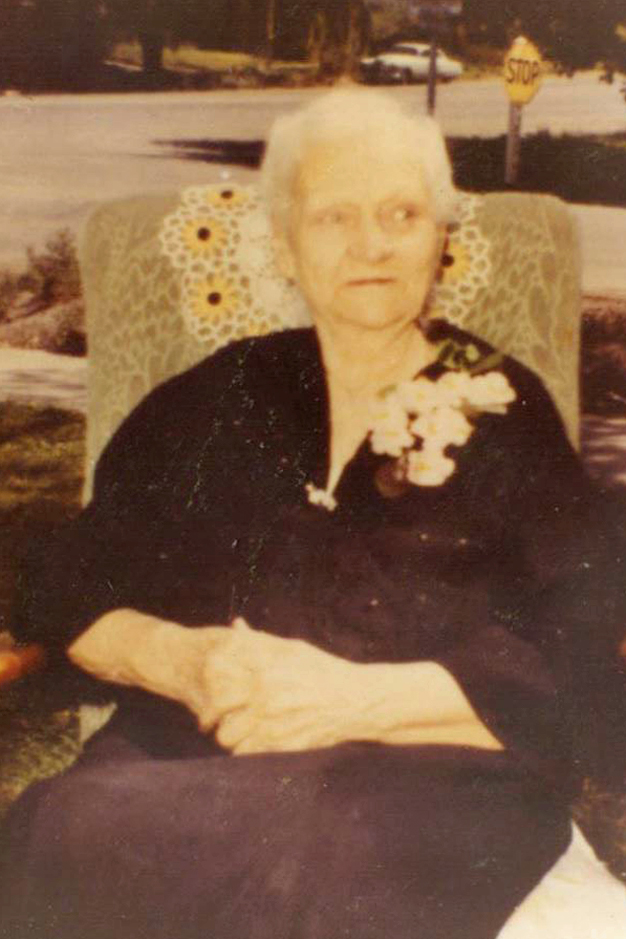
Great Grandma Grant


My great grandma Grant was one of only two of my great grand parents that was still around when I was born. I do not remember her but I would think, at some point in my early life the family made the trip to Duchesne to visit.

Susan Elvira Sidwell was born on August 15, 1865 in Manti, Utah, to Adelia Belinda and George Sidwell. The Sidwells had nine children and she was the eldest.
One of her earliest memories was when her mother took her to Brother Barton's so she could learn to play a musical instrument called the melodeon. One year her father who was in farming took a load of wheat and some hogs to market. He earned enough money to send back to New York to get Susan a piano, her mother said the melodeon "was just to squeaky".

When Susan was nine she had typhoid fever the lasted over three months "my live was in the balance". After she was well enough she continued her piano lessons. She writes "I improved very slowly as I was not very musically inclined and I could not carry a tune". When the Manti ward got an organ she was put in as the organist which meant a lot of good practice.

Susan remembered when Brigham Young came to Manti to dedicate the laying of the cornerstone for the new temple. "He took several shovels full of soil. It was raining but as he kneeled in prayer an umbrella was held over him. I often heard him preach."

When she was sixteen she went to live with a family in Pleasant Grove. she taught music lessons and was taught how to run the telegraph. it was while living in Pleasant Grove that she met James Grant.
after a few years she got a job in Gunnison to take charge of the telegraph office. She was paid $15.00 a month in Hay and grain and she gave music lessons to pay her board.

In July of 1886 Jim came down and took her and her sister North, On the 21st of July 1886 she was married to James Grant. (the marriage was later solemnized in the Manti temple). the Grants bought a home in American Fork to start their family together. (the home still stands at about 180 North 100 West). They later sold the home in American Fork and moved the family to Thurber, Utah (now Bicknell) James served as one of the early bishops of the Thurber ward.

Around 1907 they moved the family to "the reservation" in the Uintah basin and started a store and a hotel. the first hotel was not much more than a big tent, later replaced by a frame building.
for years they were affectionately known as daddy and mother Grant. They eventually built a two story brick building, which was the most up to date hotel in the basin, rooms were .50 and 1.00, meals for .50 and baths were free. The Grant Hotel also boasted the first telephone in the Uintah basin.

The Grants lived the rest of their lives in what became Duchesne, Utah. together they had ten children. James died in 1927 leaving Susan a widow for nearly thirty years. Susan died on 17th June 1956. They are buried together in the Duchesne cemetery.

Sunday, February 12, 2017

Samuel Ezra Bulow

Samuel Ezra Bulow

Four generations; Sam Bulow holding great grandson Steve Clark, Lucile Clark and Fred Clark.
My great grandfather Sam Bulow is the most distant ancestor that I can remember. He lived a few of his last years in the home of my grandparents grandma and grandpa Clark. In my memory he always wore a pair of coveralls and a long sleeved white shirt. On one occasion while we where there visiting I remember him setting at the kitchen table fiddling with his hearing aid. He said the batteries where dead. My grandmother yelled at him "there is nothing wrong with your batteries, your just deaf!"
He died on December 3rd, 1963 when I was 12 years old. His funeral was the first one I ever attended. I can remember most of all the 'viewing' which they held in his old farm house in Moroni, Utah.

Samuel was born April 6, 1877 the son of Charles Henry Bulow and Berthe Marie Johnson. He had diphtheria when he was one year old and was very ill for a long time. He lost six of his brothers in three days.
He worked the fields with his father and did not attend school until he was ten years old. His father was then the janitor at the school and they arrived at 5:00 a.m. each morning to start the fires in the classroom stoves. When he was thirteen years old his father died. after his father died he continued at school until he was sixteen but had to quit each February to work the farm.
About 1900 Sam went to Scofield and went to work in the coal mine. He left working the mine for a few years and went to Richfield, Utah. While he was working in Richfield there was an explosion at the mine that killed 200 men.
Sam went back to work the mine and lived with a family in Winter Quarters, he was paid $2.00 a day to work, and paid $30.00 a month for his room and board. On April 30, 1902 he married Caroline G. Gillott. Even after he was married he did not make much money, the house they rented in Winter Quarters cost them $6.00 a month.
My grandmother Lucile and her older brother Bill were born while they were living in Winter Quarters, Sam and his wife together had six children.
Samuel was eventually able to get a farm in Richfield, Utah. He later sold his home in Richfield and started a farm in Moroni, Utah where he spent the rest of his life.
As I said he spent some time living with his daughter in Provo, Utah and then lived with his youngest son Warren Bulow in his old farm house in Moroni, he passed away on December 3, 1963. He is buried in the Moroni city cemetery.